


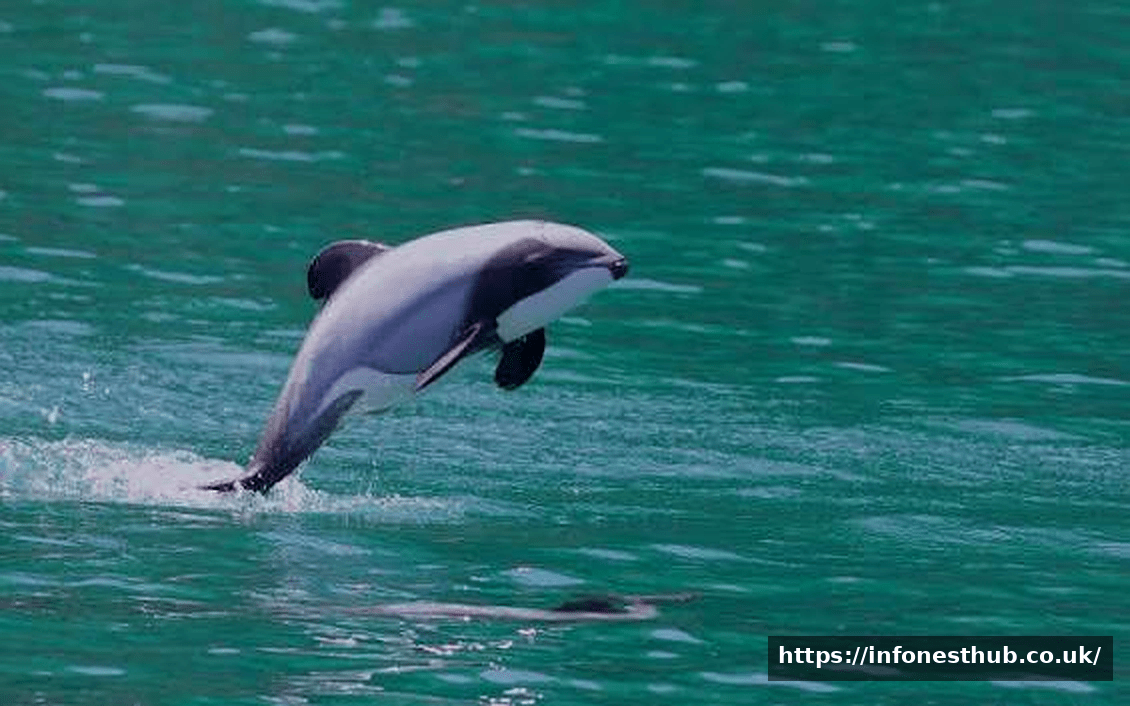
Have you ever heard of a dolphin that looks like it has Mickey Mouse ears? Meet the hector dolphins. These little creatures are special. They are the smallest and rarest dolphins on Earth . They are only found in New Zealand. Their rounded black dorsal fins look just like the famous cartoon ears. It is one of the first things people notice about them.
These tiny dolphins are a treasure for New Zealand. They are known to the Māori people as tutumairekurai or pahu . They are a taonga, which means a treasured species. Sadly, hector dolphins are in trouble. Their population is very small. They are facing many dangers. Most of these dangers come from humans. This article will explore the lives of hector dolphins. We will learn where they live and what they eat. We will also find out how people are trying to save them.
Table of Contents
What Are Hector Dolphins?
Hector dolphins are small marine mammals. They belong to a group called cetaceans, which includes whales and other dolphins. Their scientific name is Cephalorhynchus hectori . They are very unique. They are smaller than most other dolphins. An adult can grow up to 5 feet long. They weigh up to 110 pounds . This makes them one of the world’s smallest dolphins .
Their bodies are short and stocky. They do not have a long snout like the dolphins you might see on TV. Instead, they have a blunt head. Their most famous feature is their dorsal fin. It is round and low on their back . This shape is very different from the curved fins of other dolphins. It is why many people compare them to Mickey Mouse.
Their colors are also special. They are mostly gray on their body. Their belly is white. Their head, fin, and tail are black . These clear markings make them easy to spot. They have conical teeth. They use these teeth to catch their food. Hector dolphins are active and like to swim in groups. They are often seen jumping and playing in the water.
Hector Dolphins vs. Maui Dolphins: What’s the Difference?
Many people confuse hector dolphins with Maui dolphins. They are very similar. But there is a big difference between them. They are actually different subspecies. The hector dolphin lives around the South Island of New Zealand. The Maui dolphin only lives off the west coast of the North Island . They are like cousins.
The Maui dolphin is much rarer. There are only about 54 Maui dolphins left. They are critically endangered . Hector dolphins have a larger population. It is estimated at around 15,700 . Scientists separated them based on genetics and body shape. Maui dolphins have slightly larger skulls . But to most people, they look the same.
Both dolphins are endemic to New Zealand. This means they do not exist anywhere else in the world . Both are at risk. But the Maui dolphin is on the edge of extinction. When we talk about saving New Zealand’s dolphins, we must talk about both of them. They are both our responsibility.
Where Do Hector Dolphins Live?
Hector dolphins are coastal dolphins. They like to live close to land. They are native to New Zealand. They are usually found in shallow waters. They prefer water that is less than 100 meters deep . They stay close to the shore. This is why they are easy to see.
They are commonly found around the South Island. There are three main populations around the island. They are on the east, west, and south coasts . They also live near the North Island. But this is where the Maui subspecies lives. Hector dolphins stick to their own areas. They have small home ranges. They do not travel very far . They like the waters near the coast. This is their home.
Recently, scientists started studying a group in Otago. This group is very small. It has about 40 dolphins. The New Zealand Department of Conservation (DOC) is studying them. They are looking at how these dolphins connect to other groups . This helps them protect the dolphins better.
What Do Hector Dolphins Eat?
These dolphins are hunters. They eat a variety of small sea animals. Their diet includes fish, squid, and crustaceans . They like to eat small fish species. They prefer fish like red cod, sprat, and sole . They also like arrow squid. They eat a fish called the stargazer. This fish is a part of their main diet .
They have about 26 to 32 pairs of teeth. They use these teeth to catch their food. They are opportunistic feeders. This means they eat what is available. They hunt near the seafloor . They also forage in the middle of the water and near the surface. They dive to find fish. Their diet shows the health of the coastal waters.
Hector dolphins usually hunt in small groups. They work together to find food. They use echolocation to find their prey. Their teeth are small and conical. They are perfect for grasping slippery fish.
Behavior and Social Life
Hector dolphins are very social. They live in groups. These groups are called pods. Pods usually have 2 to 8 dolphins. But sometimes you can see up to 20 dolphins together . They are not as acrobatic as some other dolphins. They do not jump as much as spinner dolphins . But they still have many playful behaviors.
They show a wide range of behaviors. They like to blow bubbles. They leap out of the water. They also tail-slap . This means they slap the water with their tail. Sometimes they do something called spyhopping. This is when they stick their head straight up out of the water . They do this to look around.
They communicate using sounds. They do not use whistles like many dolphins. Instead, they use high-frequency clicks . They use these clicks for echolocation. This helps them navigate and find food. Hector dolphins use visual clues, too. They also communicate by touching. The bond between mothers and calves is strong.
Life Cycle and Reproduction
The life of a hector dolphin is slow. They live a long time. They can live up to 22 years or more . But they do not have babies very often. This is one reason their population is so fragile.
They reach sexual maturity late. Males and females mature at about 6 to 9 years of age . Females give birth to one calf. The calf is born every 2 to 4 years . The mother cares for the calf for a long time. The baby stays with its mother for up to 2 years. This is a long time for a dolphin. They also nurse their young during this time.
Calves are born in the spring. They are about 60 to 70 cm long . They are born with a special color pattern. This pattern changes as they grow older. Their slow reproduction is a big challenge. It makes it very hard for the population to recover.
The Biggest Danger: Fishing Nets
The main threat to hector dolphins is bycatch. Bycatch means animals caught in fishing nets accidentally. This is the biggest problem for them . They get tangled in gillnets. These nets are made of fine mesh. The dolphins cannot see them in the water.
They swim into the nets and get stuck . They cannot swim to the surface to breathe. They suffocate and drown. This is a terrible way to die. Both commercial and recreational fishing cause this. The fishing industry uses gillnets and trawl nets. These are dangerous for marine mammals.
The population of hector dolphins has dropped because of fishing . They have been reduced to less than 25% of their historical numbers . This is a shocking decline. Scientists estimated the population at 7,000 in the past. But modern counts show less than 16,000 overall. The small Otago group is very at risk from fishing .
Other Threats to Survival
Fishing nets are the biggest threat. But they are not the only danger. These dolphins also face other serious problems. Pollution is a major issue. Toxoplasmosis is a disease. It comes from cat feces that wash into the ocean. It kills dolphins . Disease can cause mass die-offs.
Their habitat is also at risk. Coastal development destroys their homes. Seabed mining and oil exploration also harm them . Boats can strike them. This causes injuries and death. All of these threats add up. They pressure the already small population.
Climate change is a future threat. It can change the ocean. It affects the fish they eat. The dolphins are already struggling. They are not adapting quickly. These are all human-caused problems. We are responsible for solving them.
Conservation Efforts in New Zealand
There is hope for hector dolphins. People are trying to save them. The New Zealand government has created rules. They are trying to manage the threats. The Department of Conservation (DOC) leads this effort.
One action is banning gillnets . The government banned nets in parts of the dolphin’s habitat. They are working with the fishing industry. They are trying to find safer fishing methods. But many say this does not go far enough . They want a full ban in all dolphin areas.
There is also research. Scientists are doing surveys. They are studying the population. They are tracking the dolphins . They are using DNA sampling. This tells them about genetics. It shows how groups are connected. All this helps them make better rules. The goal is a bycatch reduction plan.
How You Can Help the Hector Dolphins
You can help save hector dolphins. Even if you live far from New Zealand. The first step is to learn and share. Talk to your friends and family. Share this article. Help others understand the problem. Public awareness creates pressure for change.
You can support conservation groups. Organizations like the World Wildlife Fund (WWF) and Whale and Dolphin Conservation (WDC) work to protect them. They ask governments to make rules . You can donate or sign petitions. You can support sustainable fishing. Buying seafood with a good rating helps. If you visit New Zealand, be a responsible tourist. If you see a hector dolphin, observe it from a distance.
You can also report sightings. If you see one, use the SeaSpotter app . Data helps scientists. Every small action adds up. Together, we can make a difference.
The Importance of Protecting Marine Life
Hector dolphins are a keystone species. This means they are important for their ecosystem. They are an indicator of ocean health. If they are sick, the ocean is sick. Protecting them protects the ocean.
They are a part of New Zealand’s identity. They are a “taonga” species. This means they are a treasure. Losing them would be a great tragedy. It would hurt the culture. It would harm biodiversity. Biodiversity is the variety of life. We need to protect it.
Protecting these dolphins is about our values. It shows we care about our world. It shows we value life. Their survival is in our hands. We can choose to protect them.
Frequently Asked Questions
1. How many Hector dolphins are left in the world?
The population is estimated at about 15,700 hector dolphins. This number is for the entire species. However, this is just an estimate. Their numbers are spread across several groups.
2. Are Hector dolphins endangered?
Yes, they are officially listed as endangered. The main reason is bycatch in fishing nets. The Maui dolphin is listed as critically endangered.
3. Why are they called Hector dolphins?
They were named after a scientist. Sir James Hector was a founder of the Colonial Museum in New Zealand . It is now known as Te Papa.
4. Do Hector dolphins live in other countries?
No, they are endemic to New Zealand. You will not find them anywhere else in the world. Their habitat is very specific to New Zealand’s coastal waters.
5. What is the lifespan of a Hector dolphin?
They can live at least 22 years. Some may live up to 30 years. Their slow reproduction makes it hard for them to recover from threats .
6. What makes the Hector dolphin unique?
They are the smallest and rarest marine dolphin. Their most unique feature is their dorsal fin. It looks like a Mickey Mouse ear. It is round and black.
Conclusion
Hector dolphins are truly special creatures. They are small, unique, and full of life. They are an important part of New Zealand’s natural heritage. But they are in grave danger. Their survival depends on us. They are fighting for their lives. They are fighting against fishing nets, pollution, and habitat loss.
We have the power to help them. We need to support stronger protections. We need to push for a complete ban on dangerous nets. We must be their voice. The work of researchers is vital. It gives us the data we need to act. We must also spread awareness. Every person who knows the story of the hector dolphin can help change the world.
Their future is our choice. Will we let them disappear? I believe we can save them. It will take effort. But it is possible. We can make sure future generations see these amazing animals. They can swim free in the waters of New Zealand. Let us work together to protect these tiny, rare treasures.
