


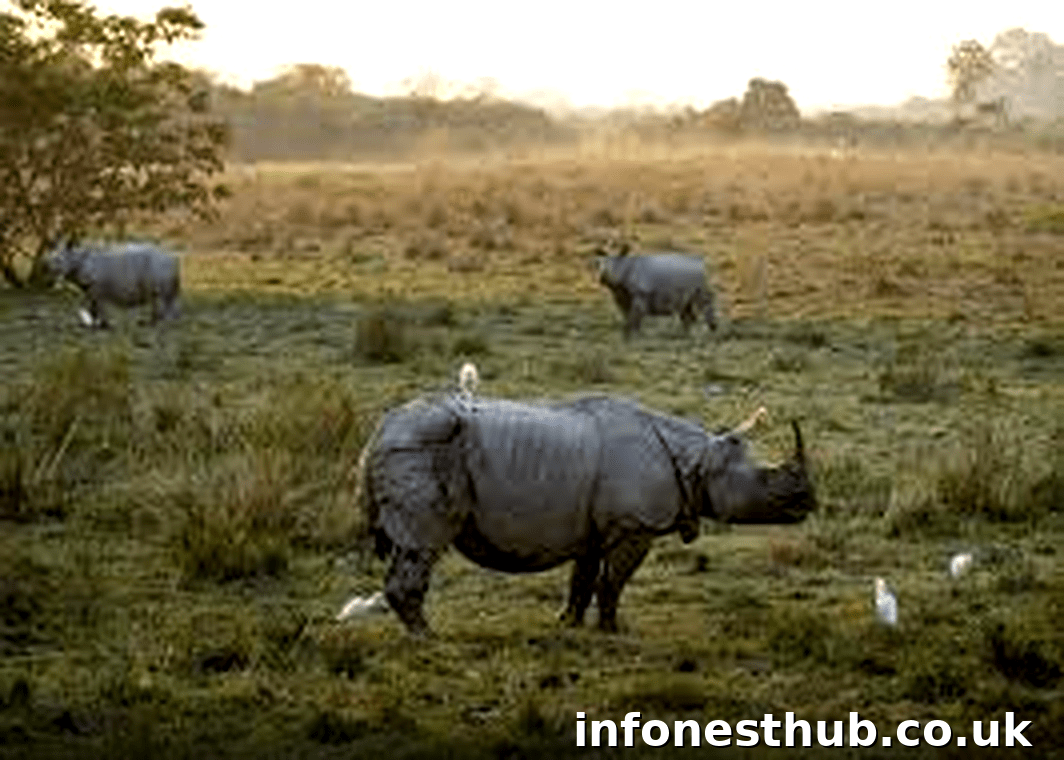
The one-horned rhinoceros in India is a true marvel of nature. These magnificent creatures, also known as the greater one-horned rhinoceros, are a symbol of wildlife conservation success. Their story is one of hope and resilience. Found mainly in the lush landscapes of Assam, these gentle giants have made a remarkable comeback.
Once on the brink of extinction, the Indian rhinoceros now roams protected areas, captivating the hearts of nature lovers worldwide. This article explores the fascinating world of the one-horned rhinoceros. We will cover its habitat, behavior, population, and the threats it faces. We’ll also celebrate the conservation efforts that saved this species. Get ready to learn why the rhino is a crown jewel of Indian wildlife.
Table of Contents
What is the One-Horned Rhinoceros?
The one-horned rhinoceros, scientifically named Rhinoceros unicornis, is a unique species . As its name suggests, it has a single horn on its snout. This distinguishes it from its African cousins, which have two horns. This Asian rhino is one of the largest land animals.
Its skin is thick and grey-brown, resembling natural armor . Deep folds in the skin give it a prehistoric look. These folds also help regulate its body temperature. The rhino’s single horn is made of keratin, the same material as human fingernails . The horn can grow up to 25 cm in length. These rhinos are also excellent swimmers and can run fast for short distances .
Physical Characteristics of the Indian Rhino
The Indian rhino is a massive beast with impressive features. They are the second-largest living rhinoceros, after the white rhino . Adult males typically weigh between 2,070 and 2,200 kg. Females are slightly smaller, weighing around 1,600 kg .
They stand about 1.7 to 2 meters tall at the shoulder . Their skin is not just thick but also has wart-like bumps on the shoulders and legs. Despite their size, they are surprisingly agile. They can change direction quickly and have been clocked running at 55 km/h . Their hearing and sense of smell are incredibly sharp. However, they have relatively poor eyesight. They rely on these other senses to navigate their environment .
The Unique Horn: Facts and Myths
The horn of the one-horned rhinoceros is a subject of fascination. It is a single blackish horn that can measure between 8 to 25 inches long . It is present in both male and female rhinos. Newborn calves do not have a horn; it begins to show after about six years .
This horn is pure keratin. It is the same material found in our hair and nails. It starts to appear when the calf reaches about six years of age. The horn is used for defense and foraging. Unfortunately, this horn has also been the rhino’s greatest enemy. Poaching for its horn is driven by false beliefs. In some cultures, it is mistakenly thought to have medicinal properties . This has led to a massive decline in rhino populations.
Where Does the One-Horned Rhinoceros Live?
The one-horned rhinoceros in India is now confined to specific protected areas. Historically, they roamed across the Indo-Gangetic plains . Today, their range is limited to small pockets in India and Nepal . They prefer habitats with tall grasslands and wetlands.
These areas are typically found in the foothills of the Himalayas. In India, they are mainly found in seven protected areas. The most significant is Kaziranga National Park in Assam. Other important sites include Pobitora Wildlife Sanctuary, Orang National Park, and Manas National Park. They also live in Jaldapara and Gorumara National Parks in West Bengal, and Dudhwa National Park in Uttar Pradesh .
Kaziranga National Park: The Rhino’s Fortress
Kaziranga National Park is a UNESCO World Heritage Site. It is the most important home for the one-horned rhinoceros in India. This park in Assam holds the world’s largest population of this species . It is a true conservation success story. The park’s efforts have been crucial in bringing rhinos back from the brink. Around 80% of India’s rhino population lives in Kaziranga .
The park provides a safe haven from poaching. It also offers the perfect habitat of grasslands and wetlands. Kaziranga also has high densities of other wildlife. This includes tigers, elephants, and wild water buffalo . Effective anti-poaching measures and habitat management have been key. They have helped the rhino population here grow significantly. In 2015, the population was estimated at over 2,613 animals . The park remains a beacon of hope for rhino conservation.
A Conservation Success Story
The recovery of the one-horned rhinoceros is a remarkable conservation story. At the start of the 20th century, only around 200 wild rhinos remained . Their numbers plummeted due to hunting and habitat loss. Strict protection from Indian and Nepalese authorities turned the tide. The population has increased from about 600 in the 1960s to over 3,000 in Assam alone today .
This is thanks to dedicated conservation initiatives. These include habitat expansion, restoration, and strong anti-poaching efforts. The work of forest guards and local communities has been vital. The Indian government’s “Double Engine” government has also played a role. Since 2016, poaching has dropped by 86% in Assam . The global population is now estimated to be over 4,000 in India and Nepal combined .
Diet and Behavior of the Indian Rhino
The one-horned rhinoceros is primarily a grazer. Their diet consists mainly of grass. They use their prehensile lip to grasp and pull tall grasses . They also eat leaves, fruits, branches, and aquatic plants. Sometimes, they venture into farmlands to eat crops like rice and corn .
They are most active in the morning and afternoon. They rest during the hottest parts of the day to avoid heat stress . These rhinos are solitary animals. They usually only come together for breeding or at wallows . They are surprisingly good swimmers. They often wallow in water or mud to cool down . Males have loosely defined home ranges and form dominance hierarchies .
The Threats They Face Today
Despite the success, threats to the one-horned rhinoceros in India remain. Poaching continues to be a major concern. The demand for rhino horn persists in some Asian countries . Habitat loss is another significant threat. As human populations grow, forests are cleared for agriculture and development. This leads to habitat fragmentation and human-wildlife conflict.
Climate change is an emerging and severe threat. More intense and frequent monsoon floods impact Kaziranga . These floods can cause the death of rhinos and other wildlife. It also forces animals to cross highways, leading to casualties. Invasive plant species are also a problem. They can degrade the grassland habitat that rhinos depend on .
How You Can Help Protect the Rhinos
Everyone can play a part in protecting the one-horned rhinoceros. Supporting conservation organizations is a great start. You can donate to groups like WWF or Aaranyak . These groups work on the ground to protect rhinos and their habitats. Spreading awareness is also crucial. Share information about the rhino’s plight with friends and family.
Avoid buying products made from rhino horn. When traveling, choose responsible wildlife tourism. This means visiting parks that follow ethical guidelines. Respect wildlife and always follow the rules. By doing this, you help ensure the safety of these animals. Your support can make a difference in protecting this incredible species. Together, we can ensure the one-horned rhinoceros continues to thrive.
The Future of the Greater One-Horned Rhino
The future for the greater one-horned rhino is hopeful but requires continued effort. Population numbers are increasing, which is a positive sign. However, sustained vigilance and management are essential. The threats of poaching and habitat loss are ever-present. We must continue to support the protected areas.
Strengthening governance, engaging communities, and better landscape planning are key . Success stories like Kaziranga show that conservation works. With continued protection, the one-horned rhinoceros in India can thrive. It serves as a testament to what can be achieved with global cooperation. It is up to us to secure a future where these magnificent animals roam free.
Detailed Comparison Table
| Feature | Details |
| Common Name | Indian Rhinoceros, Greater One-Horned Rhinoceros |
| Scientific Name | Rhinoceros unicornis |
| Distinctive Feature | Single black horn (8-25 inches) |
| Skin Type | Thick, grey-brown with pinkish skin folds, armor-like appearance |
| Body Length | Males: 368–380 cm; Females: 310–340 cm |
| Shoulder Height | Up to 1.7–2.0 m (5.75–6.5 ft) |
| Weight | Males: 2,000–2,800 kg; Females: ~1,600 kg |
| Primary Diet | Grazer (grass, leaves, fruits, aquatic plants, crops) |
| Lifespan | Up to 40 years in the wild, up to 47 in captivity |
| Speed | Up to 55 km/h for short bursts |
| Conservation Status | Vulnerable (IUCN Red List) |
| Primary Habitats | Grasslands, wetlands, and riverine forests |
| Key Locations | Kaziranga NP, Pobitora WLS, Orang NP, Manas NP (Assam); Jaldapara & Gorumara NP (West Bengal); Dudhwa NP (Uttar Pradesh) |
| Gestation Period | ~15.7 months |
| Number of Offspring | One calf per birth |
Frequently Asked Questions (FAQs)
1. How many one-horned rhinoceros are left in India?
India has over 3,000 one-horned rhinoceroses, with the vast majority living in Assam. The global population is around 4,000, spread across India and Nepal .
2. Where do most of the Indian one-horned rhinoceros live?
Most of the one-horned rhinoceros in India live in Kaziranga National Park. This park in Assam holds nearly 80% of the country’s rhino population and is the world’s largest stronghold for the species .
3. What is the main threat to the one-horned rhinoceros?
The primary threat is poaching for their horn. Habitat loss and fragmentation due to agriculture and development, as well as severe floods caused by climate change, are also major dangers .
4. What makes the Indian rhinoceros different from African rhinos?
The Indian rhinoceros has a single horn, while most African rhinos have two. They also have thick, plate-like skin folds, whereas African rhinos have smoother skin. They are also more aquatic in their habits .
5. Is the one-horned rhinoceros endangered?
The one-horned rhino is listed as “Vulnerable” on the IUCN Red List. This means it faces a high risk of extinction in the wild. However, their population has been increasing thanks to successful conservation efforts .
6. What do one-horned rhinoceros eat?
They are primarily grazers and eat tall grasses. Their diet also includes leaves, branches, fruit, and aquatic plants. They sometimes eat crops from nearby farmlands .
Conclusion
The one-horned rhinoceros in India represents a monumental conservation victory. From near extinction, its numbers have grown remarkably. This success is due to the unwavering dedication of governments, park officials, and local communities. Today, the rhino is a symbol of pride for India and especially for Assam .
Yet, the journey is not over. The battle against poaching and habitat loss continues. We must remain vigilant and supportive of conservation efforts. The story of this magnificent creature reminds us of our power to make a difference. We can protect our natural world. Let us pledge to keep this majestic species safe for future generations. Visit a national park or support a conservation group to do your part.
